



Are Montessori Toys Educational Tools?
In the late 1800’s, Dr. Maria Montessori designed specific educational toys to help toddlers refine their five senses. These Montessori toys, intended to improve sight, sound, touch, taste and smell, were created to allow for self-correction.
In other words, a child will heighten his or her five sensorial skills by using these Montessori learning tools.
Montessori Methodology wants parents and teachers to “follow the child;” follow what interests him or her; and ‘step in time’ with the child. Then, begin a hands-on, project-based tactical approach that lets the child learn by making errors until he or she gains understanding, mastery and can move on to the next project.
Sensorial Materials
These sensorial materials include:
- Colored bead bars, connected by wires to first represent the numbers one to ten, which are connected into chains that are used later for multiplication exercises
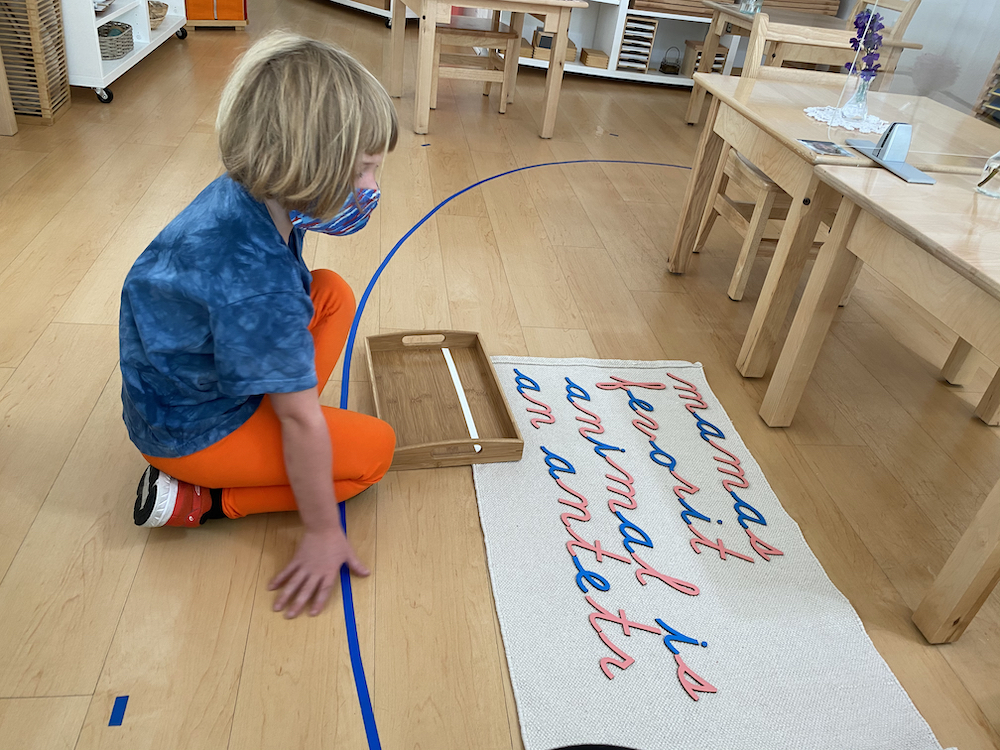
- Blue/prink sandpaper letters for learning consonants and vowels at first and are later used to morph into language materials and movable alphabets
- Puzzle maps for understanding geography
- Thermic tiles that conduct heat and different levels of temperature
- The Pink Tower
Power of The Tower
The Pink Tower gives children a physical representation of size. Ten pink cube-shaped blocks, each one to ten centimeters smaller than the one on which it sits, use coordination, order and concentration to build the tower from bottom to top. It details ‘large, larger and largest’ as well as ‘small, smaller and smallest.’
Its overriding value: preschoolers and elementary school students both use the Tower but with different end-uses: one is about weight and size while the other is focused on geometry and the volume of 3-D objects.
Yes, Montessori Toys are Educational Toys AND Learning Tools!
These toys or tools are concrete materials that increase in complexity as a child builds hand strength, dexterity and mental mastery.
First, a child identifies by number or letter; then, improves from using sensorial sandpaper to tracing; and, ultimately, towards writing. Thus, these physical, emotional and psychological training tools evolve into more comprehensive curricula.
In other words, a lasting value of sensorial materials is that it grows with your child. So, even as your child progresses from Montessori Preschool into Montessori Elementary School, the same toys/tools are employed—although in far more complex ways. Importantly, knowledge is retained from age 18 months through Grade Six.
Montessori Educational Toys Summary
Montessori toys are Montessori learning tools and are educational toys—and tools! It is a core benefit of the Montessori Method that these 125 year-old self-correcting, sensorial materials are still employed by teachers and their students throughout their most formative learning years.
At La Jolla Montessori School, children are taught individually, taught as adults, and taught dual language immersion. Located minutes from I-5 at La Jolla Village Drive, La Jolla Montessori School builds lifelong learners one day at a time. Watch a virtual tour to see how your child can thrive using Montessori Educational Toys: https://lajollamontessorischool.com/book-a-tour/
Parents Often Also Ask…
La Jolla Montessori School
Nurturing calm minds, joyful hearts, and the science of peaceful growth.
You can learn more about our Montessori approach by clicking on each of our programs below:
👉 La Jolla Montessori School’s Nido Program (Ages 6 -24 months), Toddler Program (Ages 18 months – 3 years), and Primary Program (Ages 3–6 years)