



When choosing an educational path for your child, it is natural to look beyond basic academic metrics and ask: How will this environment shape who my child becomes? What are the benefits of Montessori for lifelong success?
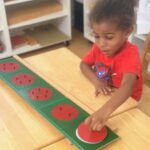
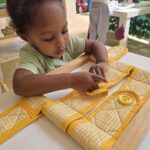
Many families first discover Montessori through the beautifully crafted materials in our classrooms—tactile, self-correcting tools that naturally invite exploration. However, these materials are merely the surface of a deep, child-centered educational philosophy. Beneath them lies a proven framework designed to support the physical, cognitive, social, and emotional growth of the whole child from early childhood through adulthood.
Here are 14 foundational benefits of Montessori education and how an authentic Montessori school can prepare students for life.
1. Nurtures Independence and Self-Directed Learning
At the heart of Montessori is a profound trust in a child’s natural desire to learn. In our prepared environments, students select activities that match their developmental stage and personal interests. A two-year-old learns self-care and workspace organization, while an older elementary student plans and executes an independent research project. This daily autonomy builds real-world confidence, self-discipline, and strong decision-making abilities.
2. Ignites a Lifelong Love for Learning
Montessori frames learning as an engaging discovery process rather than a repetitive chore. Children spend long periods engaged in practical activities—such as preparing a snack or working through a multi-step math material—which refines focus and motor coordination. By tapping into intrinsic motivation, children develop a natural curiosity that extends far beyond their school years.
3. Develops Strong Skills for Planning, Organizing, and Self-Control
Executive functioning—the mental framework that allows us to manage time, stay organized, and regulate emotions—is built into every aspect of the day. Students gather their own materials, execute complex project steps, and return their environment to order when finished. Practicing this sequence daily equips children to handle real-world challenges with calm focus.
4. Builds Social and Emotional Skills in Mixed-Age Settings
Our multi-age classrooms mirror real-world communities rather than single-grade isolation. Younger students observe and learn from older peers, while older students solidify their own understanding by stepping into mentorship roles. Through guided conflict resolution, collaborative work, and daily lessons in grace and courtesy, children cultivate genuine empathy and social confidence.
5. Instills a Worldwide Perspective and Understanding of Different Cultures
In an interconnected world, cultural awareness is essential. Montessori education weaves geography, history, and global traditions into daily exploration. Students study ancient civilizations, explore global biomes, and celebrate diverse traditions, building a mindset anchored in respect, empathy, and active global citizenship.
6. Encourages Creativity, Innovation, and Problem-Solving Skills
During the early years, Montessori materials establish deep concentration and physical control. As children enter the elementary years, that foundation empowers them to think critically, ask probing questions, and solve complex problems. Open-ended projects encourage students to view mistakes as valuable opportunities for growth and discovery.
7. Nurtures Moral and Ethical Development
Character development is integrated into daily life. Young children learn compassion through practical actions—like helping a classmate clean up a spill or comforting a friend. As they mature, students engage in group discussions, community service, and ethical problem-solving, helping them develop personal integrity and a clear moral compass.
8. Cultivates Practical Life Skills and Prepares Children for Real-World Success
From cooking, gardening, and environmental care to executing small-scale entrepreneurial projects, practical life activities are essential to our curriculum. Elementary students manage real budgets, research supplies, and adapt their plans when obstacles arise—building practical capability, adaptability, and financial literacy.
9. Promotes Ecological Consciousness
Montessori fosters a close connection between the child and the natural world. Through gardening, composting, and outdoor exploration, students learn how natural ecosystems function. They come to understand what Maria Montessori called the “Cosmic Task”—the interconnected role every living organism plays in maintaining the Earth—inspiring a lifelong commitment to sustainability.
10. Enhances Concentration and Focus
Modern life is full of distractions, making deep focus a vital skill. Montessori classrooms feature extended, uninterrupted work cycles that allow children to immerse themselves in tasks without arbitrary bell schedules interrupting their momentum. This sustained concentration strengthens memory, deepens comprehension, and instills pride in thorough work.
11. Fosters a Strong Sense of Community and Belonging
Our classrooms operate as supportive, collaborative communities. Children share responsibilities, care for their environment, and celebrate each other’s progress. Daily practices in peaceful communication ensure every child feels seen, valued, and connected to their peers.
12. Encourages a Growth Mindset, Resilience & Strong Sense of Self
Montessori materials are designed with an internal “control of error,” allowing children to self-correct their work independently without fear of judgment. This supportive structure teaches children to embrace challenges, learn from trial and error, and persist through difficult tasks with confidence. By eliminating competitive grading and standardized ranking, Montessori allows children to develop authentic self-worth. Students are free to explore their unique strengths, set personal goals, and take pride in genuine accomplishment, forming a grounded understanding of who they are.
13. Cultivates Long-Term Happiness and Well-being
When children have agency over their learning and feel supported by a respectful community, school becomes a source of joy. By nurturing emotional intelligence alongside academic depth, Montessori establishes the psychological foundation for long-term fulfillment and resilience.
14. Closely Aligns with Current Research on the Science of Reading
Maria Montessori’s approach to literacy anticipated modern structured literacy research. Early childhood environments introduce phonetic sounds systematically through tactile, multi-sensory materials like Sandpaper Letters and the Movable Alphabet. Children master letter-sound relationships, phonemic blending, and segmenting at their own pace, leading naturally to fluent, confident reading.
Discover Authentic Montessori at La Jolla Montessori School
Montessori education is more than a academic method—it is a foundation for life. By honoring each child’s natural development, we cultivate confident learners, creative thinkers, and compassionate leaders ready to make a positive impact on the world.
Parents Often Also Ask…
La Jolla Montessori School
Nurturing calm minds, joyful hearts, and the science of peaceful growth.
You can learn more about our Montessori approach by clicking on each of our programs below:
👉 La Jolla Montessori School’s Nido Program (Ages 6 -24 months), Toddler Program (Ages 18 months – 3 years), and Primary Program (Ages 3–6 years)
This topic was inspired by @Association Montessori Internationale